
How to Print Custom Logos on Golf Balls

Customized golf balls are increasingly popular for corporate events, golf tournaments, sports clubs, promotional campaigns, personalized gifts, and branded merchandise.

A golf ball printing machine allows businesses to add logos, names, graphics, numbers, and custom designs directly onto the curved surface of a golf ball.

With the right printing system, companies can offer short-run customization without depending on traditional large-volume production methods.

Whether you operate a print shop, promotional-product company, golf business, or personalized gift service, custom golf ball printing can introduce a valuable new product category.

Why Custom Golf Balls Are in Demand

Golf balls are practical products that also provide a visible branding opportunity. They can be customized for a wide range of commercial, promotional, and personal applications.

Common applications include:

  • Corporate promotional gifts
  • Golf tournaments and competitions
  • Golf clubs and training academies
  • Sports merchandise
  • Wedding and event favors
  • Personalized birthday gifts
  • Brand launches
  • Hotel and resort promotions
  • Employee and customer appreciation gifts

Because golf balls are compact, practical, and easy to distribute, they work particularly well for event marketing and premium promotional campaigns.

What Is a Golf Ball Printing Machine?

A golf ball printing machine is designed to apply customized artwork directly to the curved surface of a golf ball.

Depending on the machine configuration, the system may use UV-curable ink and a specially designed fixture to keep each golf ball stable during printing.

The fixture helps position multiple golf balls consistently so that the logo or design is applied accurately in the intended printing area.

A golf ball printing system can support:

  • Company logos
  • Customer names
  • Tournament dates
  • Numbers and initials
  • Full-color graphics
  • Sponsor branding
  • Custom symbols
  • Short promotional messages

Compared with conventional printing processes that may require higher minimum quantities, digital printing makes small and personalized orders more practical.

How the Golf Ball Printing Process Works

The exact workflow depends on the machine configuration, ink system, software, golf ball coating, and production requirements. A typical golf ball printing process includes the following steps.

1. Prepare the Artwork

The logo or design should be prepared in a high-resolution format. Vector files are generally preferred for logos because they remain sharp when resized.

Common artwork formats may include:

  • PDF
  • AI
  • EPS
  • SVG
  • PNG with a transparent background

The artwork should be adjusted to match the safe printable area of the golf ball.

2. Clean the Golf Ball Surface

The golf ball surface should be clean and free from oil, dust, moisture, and other contamination.

Proper cleaning helps the ink bond more consistently. Some golf ball materials or coatings may require additional preparation or adhesion treatment.

3. Position the Golf Balls in the Fixture

The golf balls are placed into a dedicated jig or fixture. The fixture keeps each ball stable and ensures that the printable area remains correctly aligned with the printhead.

Accurate positioning is important because even a small movement can affect logo placement and printing consistency.

4. Configure the Printing Software

The operator imports the artwork into the printing or RIP software and adjusts the required production settings.

These settings may include:

  • Print size
  • Image position
  • Printing resolution
  • Ink density
  • White ink layer
  • Color layer
  • Printing direction
  • Number of copies

A test print is recommended before starting a larger production run.

5. Print and Cure the Design

The machine applies the ink directly onto the golf ball. In a UV printing system, the ink is cured during printing using UV light.

This allows the printed design to become dry and ready for handling shortly after production.

6. Inspect the Finished Golf Balls

After printing, each golf ball should be inspected to ensure consistent quality.

Quality checks may include:

  • Correct logo placement
  • Sharp design edges
  • Accurate colors
  • Consistent ink coverage
  • Surface adhesion
  • Complete design details
  • Absence of visible printing defects

Adhesion and durability testing should also be completed before accepting large orders, especially when using a new golf ball brand or surface material.

Why UV Printing Is Suitable for Golf Ball Customization

Full-Color Printing

UV printing allows businesses to reproduce colorful logos, illustrations, gradients, and branded graphics rather than being limited to basic one-color designs.

Short-Run Production

Digital printing makes it possible to produce personalized or low-volume orders without preparing traditional printing plates.

Fast Production

UV ink cures during the printing process, reducing the waiting time before the finished golf balls can be handled, inspected, or packed.

Variable Personalization

Different names, numbers, or designs can be produced within the same digital printing workflow.

A tournament order could include:

  • A shared tournament logo
  • Individual player names
  • Different team numbers
  • Sponsor branding
  • Competition dates

Compact Product Size

Golf balls require relatively little storage space, making them suitable for print shops that want to expand into customized products without adding large inventory requirements.

Business Opportunities for Golf Ball Printing

Corporate Promotional Products

Companies can order branded golf balls for customer gifts, exhibitions, executive events, business meetings, and promotional campaigns.

Golf Tournament Merchandise

Tournament organizers can add event names, dates, sponsor logos, club branding, and individual player information.

Personalized Online Orders

E-commerce businesses can allow customers to upload names, logos, messages, or artwork for personalized golf ball sets.

Golf Club Services

Golf clubs, academies, training centers, and sports retailers can sell customized golf balls featuring their own branding.

Wedding and Event Gifts

Personalized golf balls can be offered as event favors or gifts for customers looking for a sports-themed product.

Sports Brand Sampling

New golf and sports brands can use short-run printing for product demonstrations, sample sets, launch campaigns, and promotional packages.

Important Factors When Choosing a Golf Ball Printing Machine

Print Quality

The system should reproduce small text, detailed logos, and complex graphics clearly.

Fixture Accuracy

The golf ball fixture should position every ball consistently and prevent movement during printing.

Ink Adhesion

The ink system should be tested on the intended golf ball surface. Different coatings and materials may produce different adhesion results.

White Ink Capability

White ink can be important when printing on colored golf balls or when a white base layer is required beneath full-color artwork.

Software Compatibility

The workflow should support commonly used design files and provide accurate control over artwork size and position.

Production Capacity

Businesses should evaluate:

  • Number of golf balls per fixture
  • Printing time per batch
  • Expected daily production volume
  • Fixture changeover time
  • Operator requirements

Technical Support

Installation guidance, software assistance, maintenance support, operating training, and spare-parts availability are important for reliable long-term production.

Tips for Better Golf Ball Printing Results

  • Test every new golf ball brand before mass production.
  • Use high-resolution or vector artwork.
  • Keep the fixture clean and properly aligned.
  • Confirm the printable area before accepting an order.
  • Avoid oversized artwork that exceeds the stable printing area.
  • Maintain the printhead according to the manufacturer’s instructions.
  • Store inks under the recommended environmental conditions.
  • Perform adhesion tests when changing golf ball materials.
  • Keep production samples for future repeat orders.
  • Obtain customer approval for the final artwork before printing.

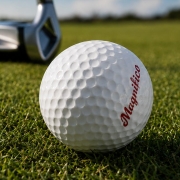
Example: A Custom Magnifico Golf Ball

The featured golf ball demonstrates how a brand name such as Magnifico can be printed directly onto a golf ball to create a premium promotional product.

This type of customization can be used for:

  • Sports brands
  • Golf clubs
  • Hospitality businesses
  • Corporate events
  • Retail gift sets
  • Tournament merchandise

A clean logo, carefully selected printing size, suitable ink settings, and accurate positioning help the finished product look professional and commercially ready.

Is Golf Ball Printing a Good Business Opportunity?

Golf ball printing can be a valuable addition for businesses already working in personalized products, promotional merchandise, UV printing, or event customization.

The opportunity is particularly attractive for companies that can offer:

  • Low minimum order quantities
  • Fast production
  • Full-color printing
  • Individual personalization
  • Custom packaging
  • Design assistance
  • Business-to-business order fulfillment

The printer may also form part of a broader customized-product service rather than being limited exclusively to golf balls.

Start Producing Custom Golf Balls with Inkit

Inkit provides printing solutions for businesses that want to expand into customized products and short-run digital production.

A golf ball printing system can help companies produce branded, personalized, and event-specific products through a flexible digital workflow.

Contact the Inkit team to discuss:

  • Machine configuration
  • Golf ball printing fixtures
  • Production capacity
  • Ink options
  • Software workflow
  • Sample testing
  • Technical support

Build Your Custom Golf Ball Printing Business

Talk with the Inkit team about the right printing configuration for customized golf balls, promotional products, personalized sports merchandise, and short-run production.
Request a Printing Solution

Why DTF Printing Is Transforming the T-Shirt Business

Custom apparel has become one of the fastest-growing segments in the personalized product industry. From fashion brands and promotional merchandise to small online stores and print-on-demand businesses, customers increasingly expect vibrant, durable, and unique designs on every garment.

Direct-to-Film (DTF) printing has emerged as one of the most efficient technologies for apparel customization, delivering exceptional image quality while simplifying production. Whether you’re launching a clothing brand or expanding an existing printing business, DTF printing provides the flexibility and efficiency needed to stay competitive.


Why DTF Printing Is Becoming the Industry Standard

Unlike traditional garment decoration methods, DTF printing allows businesses to produce full-color transfers that can be applied to a wide variety of textiles without complicated setup procedures. It combines outstanding print quality with production flexibility, making it suitable for both small custom orders and large-scale manufacturing.

  • Brilliant full-color printing
  • High-definition image reproduction
  • Smooth color gradients
  • Excellent wash durability
  • Fast production workflow
  • Low setup costs
  • Ideal for on-demand production

Exceptional Color Performance

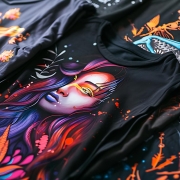
Modern consumers demand apparel with rich colors and detailed artwork. DTF printing accurately reproduces complex graphics, vibrant illustrations, photographic images, and artistic gradients without sacrificing quality.

Designs featuring neon colors, detailed portraits, intricate illustrations, and high-contrast artwork can all be printed with remarkable precision, allowing businesses to deliver premium-quality customized products.


Perfect for Fashion Brands

Streetwear Collections

Create bold oversized graphics, artistic illustrations, and modern fashion designs with exceptional print clarity.

Artist Collaborations

Transform digital artwork into wearable products while preserving every detail and color of the original design.

Limited Edition Releases

Launch exclusive collections without investing in large inventories, making limited production runs both practical and profitable.


Compatible with Multiple Fabric Types

DTF transfers adhere to a wide range of materials, allowing businesses to expand their product offerings without investing in multiple printing technologies.

  • Cotton T-Shirts
  • Polyester Garments
  • Hoodies
  • Sweatshirts
  • Sportswear
  • Canvas Bags
  • Denim Apparel
  • Uniforms
  • Children’s Clothing

Reduce Inventory with On-Demand Production

Traditional apparel manufacturing often requires large inventories and high upfront costs. DTF printing supports an efficient print-on-demand workflow, allowing businesses to manufacture products only after receiving customer orders.

This production model helps reduce inventory costs, eliminate unsold stock, and respond quickly to changing market trends while offering virtually unlimited design options.


Outstanding Durability

Customers expect customized apparel to remain vibrant even after repeated washing. High-quality DTF transfers provide excellent adhesion, flexibility, crack resistance, and long-lasting color performance.

When combined with premium films, powders, and proper curing processes, DTF prints maintain their professional appearance throughout everyday use.


Ideal Business Applications

DTF printing is suitable for numerous commercial applications, including:

  • Fashion Brands
  • Print Shops
  • Promotional Merchandise
  • Corporate Uniform Production
  • Print-on-Demand Businesses
  • Personalized Gift Stores
  • Sports Apparel
  • School and Event Merchandise

Why Choose Inkit DTF Printing Solutions

Inkit develops professional DTF printing solutions designed for businesses seeking reliable production, exceptional print quality, and long-term operational efficiency.

Our systems are engineered to provide:

  • High-resolution printing
  • Stable industrial performance
  • Consistent color reproduction
  • User-friendly operation
  • Efficient production workflow
  • Reliable daily output

Whether you’re starting your first custom apparel business or expanding an existing production facility, Inkit provides the technology needed to support sustainable business growth.


Start Your Custom Apparel Business with Confidence

The global demand for personalized apparel continues to grow as consumers seek products that reflect their individual style. DTF printing enables businesses to deliver premium-quality customized garments while maintaining production flexibility and reducing operating costs.

If you’re planning to enter the apparel customization market or upgrade your current production capabilities, Inkit’s professional DTF printing solutions provide a powerful foundation for long-term success.

Explore Inkit DTF Printing Solutions today and discover how advanced digital textile printing can help your business grow.

How to Start a Phone Case Business from Zero

The custom phone case market continues to grow as consumers look for personalized products that reflect their personality, interests, and lifestyle. Thanks to modern UV printing technology and cloud printing solutions, launching a phone case business no longer requires a large factory or significant startup capital.

Whether you plan to operate an online store, a shopping mall kiosk, a souvenir shop, or a fully automated printing vending machine, this guide will walk you through every step of building a profitable phone case business from the ground up.

Why Phone Case Printing Is a Great Business Opportunity

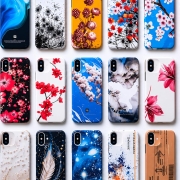
Every year, hundreds of millions of smartphone users purchase new protective cases. While standard products dominate the market, customers increasingly prefer personalized designs featuring family photos, artwork, anime characters, pets, logos, travel memories, and AI-generated illustrations.

Unlike traditional manufacturing, customized phone cases are produced only after an order is placed. This eliminates unnecessary inventory while allowing businesses to offer thousands of design possibilities without stocking thousands of products.

  • Low startup investment
  • High profit margins
  • No minimum order quantity
  • Fast production time
  • Suitable for online and offline sales
  • Easy business expansion

Step 1: Define Your Business Model

Before purchasing equipment, determine how you want to reach customers.

Online Store

Create an eCommerce website where customers upload photos and place orders. This model provides the largest market reach and allows 24/7 sales.

Retail Store

Offer instant customization inside shopping malls, gift shops, tourist attractions, universities, or electronics stores where customers can receive their printed case within minutes.

Printing Vending Machine

Automated printing kiosks allow customers to create personalized phone cases without staff assistance. Users simply scan a QR code, upload their design, complete payment, and receive the finished product automatically.

Wholesale & B2B

Provide customized products for promotional events, schools, corporate gifts, tourist attractions, and brand marketing campaigns.


Step 2: Choose the Right Printing Equipment

Your printer is the foundation of your business. Professional UV printers provide vibrant colors, durable ink adhesion, and high-speed production while supporting multiple phone case materials.

Look for equipment that offers:

  • High-resolution printing
  • Automatic height adjustment
  • Stable ink circulation system
  • White ink support
  • Color varnish printing
  • Simple maintenance
  • Reliable software integration

Professional printing equipment improves production efficiency while ensuring consistent product quality.


Step 3: Prepare Your Product Catalog

Offer different phone case styles to satisfy various customer preferences.

Popular Materials

  • TPU Soft Cases
  • PC Hard Cases
  • Hybrid Protective Cases
  • Transparent Cases
  • Leather Cases
  • MagSafe Compatible Cases
  • Premium Matte Cases

Supported Phone Brands

  • Apple iPhone
  • Samsung Galaxy
  • Huawei
  • Xiaomi
  • OPPO
  • Vivo
  • Google Pixel
  • OnePlus

The wider your compatibility range, the larger your potential customer base.


Step 4: Build Your Design Library

Customers love having multiple design choices. Build a large collection of ready-to-print templates while allowing complete customization.

Trending Categories

  • Anime
  • Gaming
  • Sports
  • Luxury
  • Nature
  • Pets
  • Travel
  • Quotes
  • Minimalist
  • Fashion

AI Generated Designs

Modern AI technology allows customers to create unique artwork using simple text prompts, making personalization even easier and more engaging.


Step 5: Create an Easy Ordering Experience

The simpler your ordering process, the higher your conversion rate.

A typical workflow includes:

  1. Select phone model
  2. Upload image or choose template
  3. Edit text or layout
  4. Preview final design
  5. Complete payment
  6. Automatic production
  7. Shipping or instant pickup

Reducing unnecessary steps improves customer satisfaction and encourages repeat purchases.


Step 6: Price Your Products Correctly

Your pricing should cover production costs while remaining competitive.

Calculate:

  • Blank phone case cost
  • Ink consumption
  • Packaging
  • Labor
  • Shipping
  • Marketing expenses
  • Platform fees

Many successful businesses maintain healthy profit margins by focusing on premium customization instead of competing solely on price.


Step 7: Market Your Business

Even the best products require consistent marketing to reach new customers.

Social Media

  • Instagram
  • TikTok
  • Facebook
  • YouTube Shorts
  • Xiaohongshu
  • Pinterest

Content Ideas

  • Printing process videos
  • Before and after transformations
  • Customer reactions
  • Design tutorials
  • AI artwork creation
  • Trending seasonal collections

Short-form video content is particularly effective for showcasing personalized products.


Step 8: Expand Beyond Phone Cases

Once your business becomes stable, you can increase revenue by offering additional personalized products using the same printing technology.

  • Keychains
  • Acrylic products
  • Photo frames
  • Gift boxes
  • Wood products
  • Leather accessories
  • Metal souvenirs
  • Commemorative coins
  • Name plates
  • Promotional merchandise

Expanding your product catalog helps increase the average order value while serving a wider range of customer needs.


Common Mistakes Beginners Should Avoid

Buying Low-Quality Equipment

Cheap equipment often leads to poor print quality, frequent maintenance, and dissatisfied customers.

Offering Too Few Designs

A limited selection reduces customer engagement. Continue updating your design library with seasonal and trending content.

Ignoring Marketing

Quality products alone do not guarantee sales. Invest time in social media, content creation, and customer engagement.

Poor Customer Service

Fast communication, accurate production, and reliable after-sales support build trust and encourage repeat business.


Final Thoughts

Starting a phone case business has never been more accessible. With professional UV printing equipment, cloud printing software, and AI-powered customization tools, entrepreneurs can launch a profitable business with minimal inventory and maximum flexibility.

Whether you choose an online store, retail shop, or self-service printing vending machine, success comes from combining reliable equipment, creative designs, efficient production, and excellent customer experience.

By focusing on quality, innovation, and personalization, you can build a scalable phone case business that continues to grow alongside the expanding demand for customized products.